Special Israel Update: Operations Epic Fury/Roaring Lion
NO MORE HOSTAGES; IDF Soldiers lost since October 7th: 925
After a few weeks off, the Israel Update is back, and what a day to return! I hope you find these updates resourceful. I will be back with more as new information becomes available. Please feel free to share with friends and family, near and far! Am Israel Chai (the people of Israel live!)
Situational Update
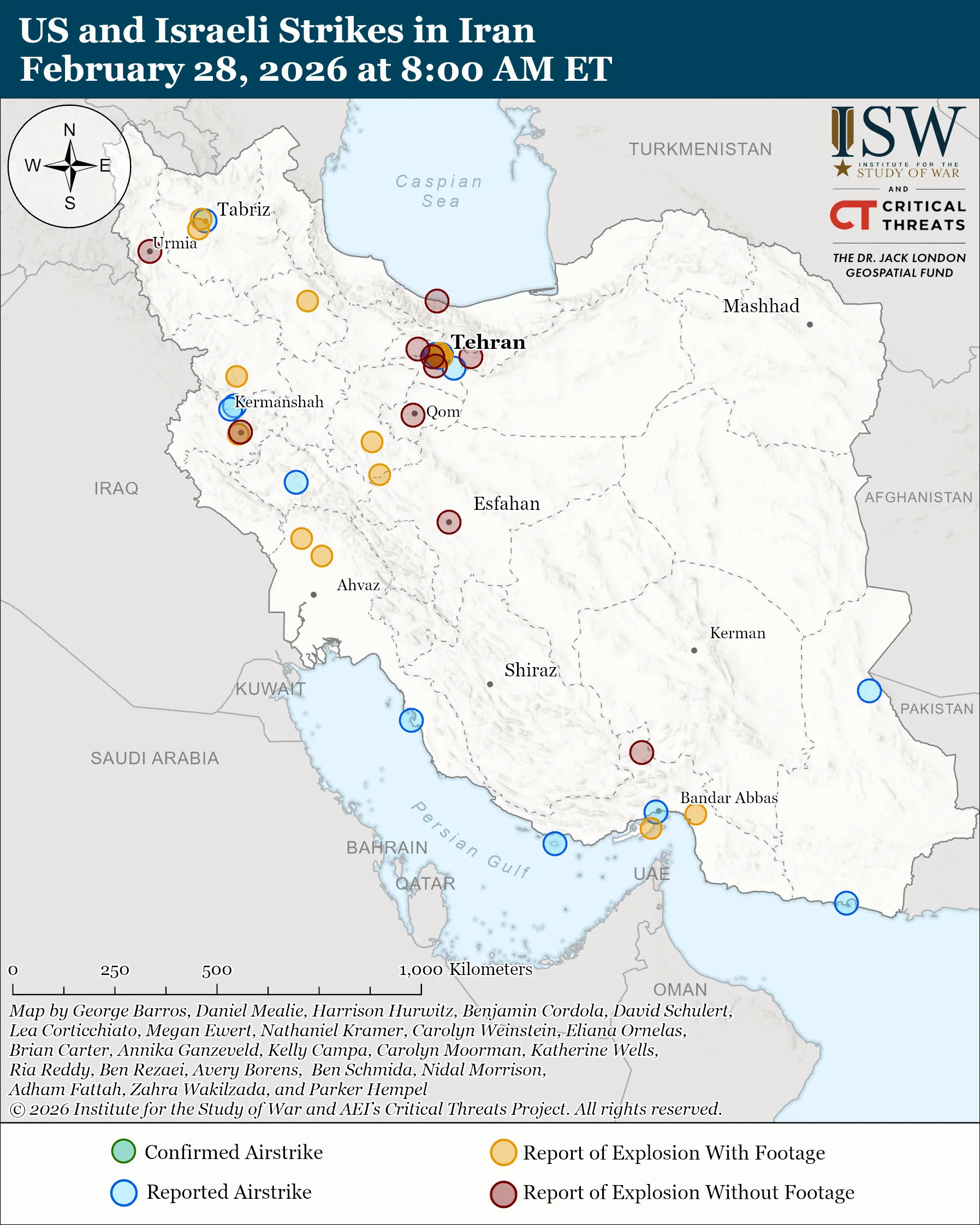
In the early hours of February 28, the United States and Israel launched a coordinated military campaign against the Iranian regime—Washington calling it “Operation Epic Fury,” Israel calling it “Operation Lion’s Roar.” Strikes hit sites across Iran, targeting ballistic missile infrastructure, IRGC facilities, intelligence headquarters, and senior regime leadership, The Institute for the Study of War reports.
Israeli strikes focused on high-value officials and Iran’s missile capabilities, while the U.S. attacks went after missile infrastructure and military targets,
President Donald Trump confirmed on February 28 that Iranian Supreme Leader Ayatollah Ali Khamenei had been eliminated
According to the WSJ: Intelligence officers had identified not just one meeting but three, Israeli officials said. And they had a fix on Supreme Leader Ayatollah Ali Khamenei, Iran’s top decision maker and spiritual leader. The moment was so unique that U.S. and Israeli warplanes struck in full daylight. Israeli jets dropped 30 bombs on Khamenei’s compound leaving it scorched and shattered.
The U.S. also had intelligence that Iran considered attacking American targets before Trump authorized strikes, a senior administration official said, adding a sense of urgency to the president’s decision. U.S. casualties and damage to American interests would be higher unless the U.S. moved first, the senior official said.
Officials stated that dozens of senior Iranian officials were killed along with Khamenei.
…among the dead were Iranian Defense Council Secretary Ali Shamkhani, Islamic Revolutionary Guard Corps Chief Mohammad Pakpour, intelligence official Salah Asadi, Khamenei’s military bureau chief Mohammad Shirazi, Iranian Minister of Defense Aziz Nasirzadeh, Organization of Defensive Innovation and Research (SPND) chairman Hussein Jabel Amalean, and former SPND chairman Reza Mozafari-Nia (SPND is responsible for developing and building nuclear weapons).
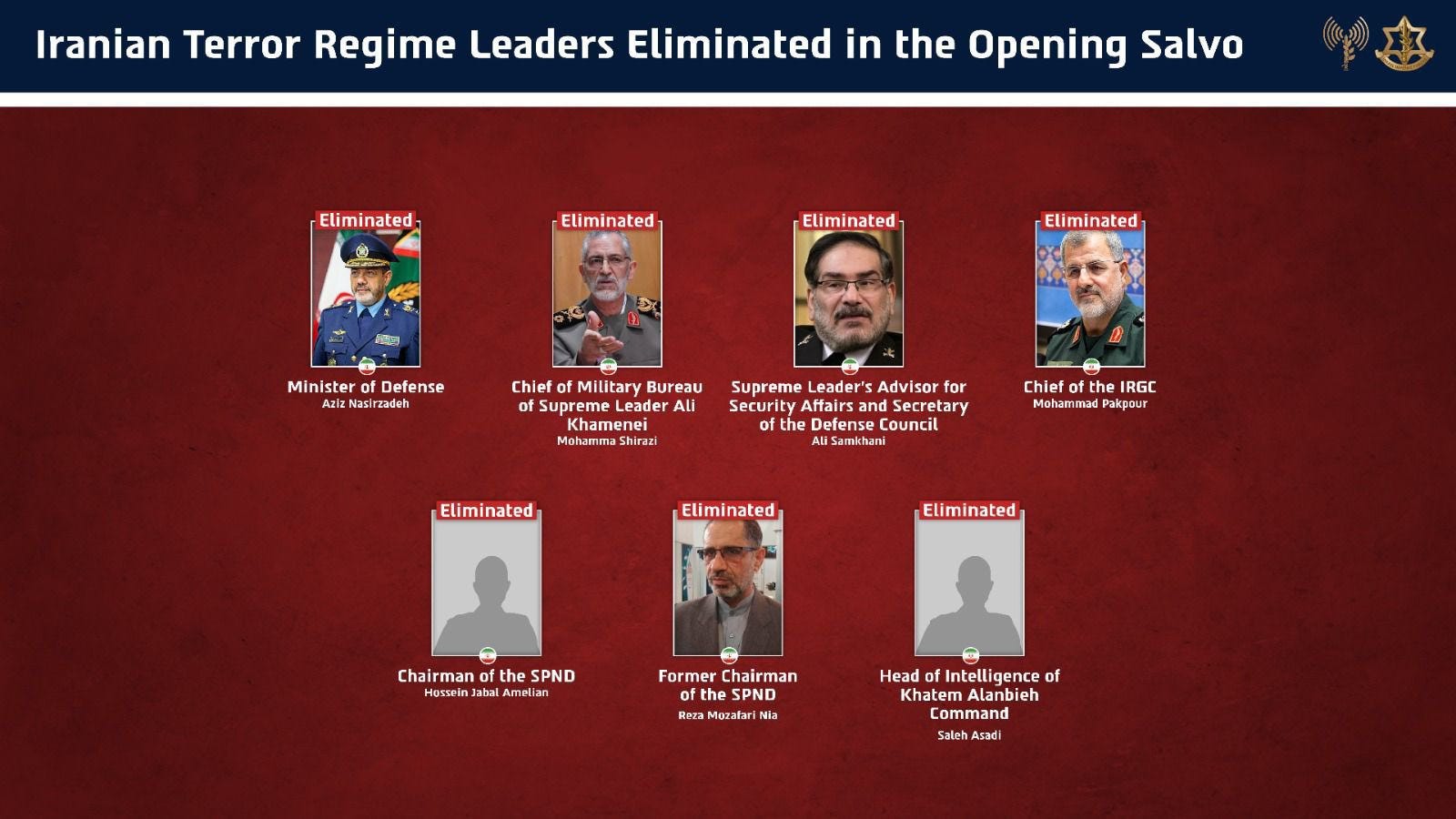
Israel and the United States have also attacked Iranian military targets. Some of these attacks are probably meant to disrupt Iran’s ability to immediately retaliate. The IDF announced that it has targeted “hundreds of military targets,” including missile launchers, in western Iran.
In parallel with the strikes, Israel hit Iran with broad cyberattacks that targeted media and phone apps with messages calling on Iranians to rise up against their government
Israel hacked an app that helps Muslims track prayer times and is used widely in Iran, causing it to send messages calling on Iran’s armed forces to defect and telling the population that “help has arrived.”
US Central Command responds to false Iranian regime claims:
There have been no reported U.S. casualties.
No U.S. Navy ship has been struck. The Armada is fully operational.
Damage to U.S. installations was minimal and has not impacted operations.
The Israeli Air Force says this was the largest military flyover in IDF history
200 IAF jets completed a broad strike against the missile array and the aerial defense systems of the IRGC in western and central Iran.
500+ targets hit, including aerial defense systems & missile launchers in several locations throughout Iran simultaneously.
Iran has launched multiple barrages at Israel in recent hours. An Israeli media correspondent reported that Iran had launched around 35 missiles at Israel as of 5:42 AM ET. Iran has also attacked numerous US bases across the region. Iran has attacked US bases in Bahrain, Qatar, the United Arab Emirates, Kuwait, Jordan, and Saudi Arabia.
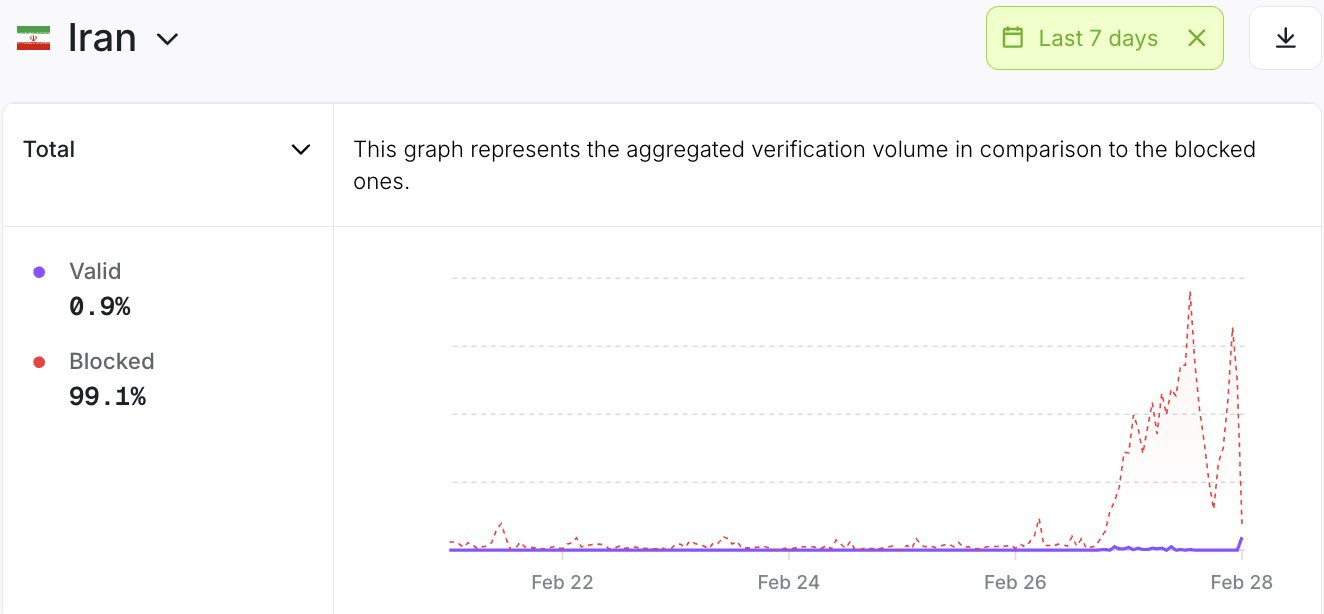
[A BIG DEAL] Nikita Bier, head of Product for X posted: Wave of Iranian bots being filtered (meaning the X systems filtered a big wave of Iranian bots designed to create massive misinformation on social media). He later wrote “today was the biggest day on 𝕏 in history.”
The Institute for the Study of War (ISW) published this map of joint US/Israel strikes inside of Iran
Commentary and Analysis
Nadav Eyal, Israeli journalist with YNet
The Middle East is still in shock over the assassination of Ali Khamenei, the world’s longest-serving dictator and the architect of the “Axis of Resistance.” Together with other eliminations, this is a strategic blow of historic magnitude - and the first time Israel has killed the head of a sovereign state…The United States and Israel have amassed an enormous bank of targets over time, intended to degrade Iran’s military capabilities - with emphasis on its ballistic industry and nuclear infrastructure, but also military research…The objective of toppling the regime, or at least forcing profound change, remains in place. Three main scenarios:
The Islamic Republic survives institutionally, suppresses opposition, and waits it out. Given the American commitment against a ground invasion, endurance and resilience would be key to what the Islamic Republic will see as victory. For this scenario to hold, the regime must maintain internal hierarchy and discipline — and know how to crush protests amid ongoing strikes.
Israel and the U.S. continue eliminating senior officials, wiping out second- and third-tier leadership, until reaching an internal figure willing to make major concessions and accept the demands presented by the U.S. president - a form of internal transformation. Israel is highly skeptical of this scenario.
The third and most desired scenario - and one can assume Washington and Jerusalem are working toward it - is that internal actors seize control of the state. Either through a coup, for example by elements of the military, or through a genuine revolution. In any case, and as the president himself has implied, this is not expected to happen in the immediate, active phase of the war.
Mike Doran, Director of the Middle East Center at the Hudson Institute
Ayatollah Khamenei portrayed himself as the preeminent leader of the Muslim world, the guardian of the faithful, a figure whose authority transcended borders. He refused direct engagement with Western heads of state. Such encounters were beneath his stature, a leader with no peer.
For years, intelligence assessments and regional analysts warned that any strike against him would ignite a conflagration across the Middle East and beyond. His death, they cautioned, would unleash uncontrollable fury in Shiite communities and destabilize the region.
Yet after he was killed by American and Israeli action, the response has been strikingly restrained. No regional inferno. No sweeping uprising. Even in major Shiite centers—Iraq, Lebanon, Yemen, Syria, the Gulf—the outrage has been muted.
The gap between prediction and reality reveals something important. Khamenei’s aura existed largely in the imagination of his propagandists—and among Western observers predisposed to magnify the reach of those who revile and threaten them in the name of the oppressed. In reality he was just another dictator who ruled through coercion and myth.
Mark Dubowitz, CEO, Foundation for Defense of Democracies
President Donald Trump’s announcement of “Operation Epic Fury,” coordinated with Israel’s “Operation Lion’s Roar,” was telling. He did not outline a post-ayatollah blueprint. He did not name successors.
Instead, he made two objectives unmistakably clear: dismantling Iran’s nuclear and missile threats, and giving the Iranian people a real chance to topple their oppressors.
Trump’s view is straightforward. The United States must eliminate the external threat Iran poses to Israel, America, Europe and its Arab neighbors, but what replaces the regime inside Iran is up to the Iranian people.
…the survival of this regime — a nuclear-seeking, terror-sponsoring, protest-crushing dictatorship — is far more dangerous than the risks that come with its collapse. The alternative to uncertainty is continued tyranny. And that is worse.
The Iranian people overwhelmingly want change. They have risked their lives for it…America’s role is not to pick their leaders — it is to remove the regime’s ability to threaten the world and to give those brave citizens a fighting chance.
Karim Sadjadpour with The Atlantic
Khamenei’s death by the hand of a nation he worked very hard to kill is a hinge moment in the history of the 47-year-old revolution. He was the last of the regime’s first-generation founders.
Khamenei understood that his power was best preserved in a bubble. Not complete isolation—he wanted to sell Iran’s oil—but calibrated insularity, walled off from the global forces of capitalism and civil society that would expose and erode the regime.
But insularity has its costs, and they were borne entirely by the Iranian people. Khamenei treated the relationship between the state and its citizens not as a social contract but as a predatory lease—nonnegotiable, imposed by the landlord, long since expired. The regime micromanaged the personal lives of more than 90 million people, dictating whom they were allowed to love, what they drank, what women wore on their heads
Khamenei confronted the paradox that every revolutionary caretaker must face: The revolution he preserved was designed for a world that no longer exists.
Haviv Rettig Gur with The Free Press
The Islamic Republic has been a catastrophe for Iran, for its economy, its culture, its talent, its women, its future. The brightest Persian minds are either refugees or martyrs. The regime has spent 47 years calling itself a revolution and produced nothing but a more bloody and totalitarian apparatus of control than any that country had ever known. It is not, as some Western analysts lazily suggest, simply irrational or backward. It is a sophisticated ideological project that has stolen the worst ideas of the 20th century—Marxist-Leninist vanguardism, Fanonian redemptive violence, Maoist people’s war—and fused them to a version of Shia theology that previous generations of Shia would not recognize. And it is failing.
The West’s task is not to save Iran. Iranians are already trying to do just that, at enormous personal cost, with extraordinary courage. The task is to make sure the regime cannot massacre its way back to stability. And to make sure that when it falls, what follows is not another iteration of the same.
Amit Segal, Chief political commentator for Channel 12 News and Israel Hayom
Today was just a taste of what a joint U.S.-Israel attack can bring to bear. Think of Israel as a pair of brass knuckles and the U.S. as two clenched fists. One brings overwhelming power; the other, effectiveness.
But this is about more than Israel. To my eye, Trump is genuinely done with the regime. In his announcement of the strikes, he wasn’t Mr. Nice Trump. As he pointed out, this regime has been shouting “Death to America” and “Death to Israel” for decades. They finance terrorism. They launch terrorism. They are responsible for the deaths of hundreds of Americans and thousands of Israelis. Enough is enough.
[MUST READ] Japan Is the Big Winner by Zineb Riboua with the Hudson Institute
The gains Operation Epic Fury delivered to Tokyo are structural and extend across every dimension of that rivalry.
First, the energy constraint.
China’s ability to project power simultaneously in the South China Sea and the Western Pacific depends on a permissive energy environment, one in which tankers move freely, reserves remain full, and no external shock forces Beijing to choose between fueling its navy and fueling its economy. That environment no longer exists.
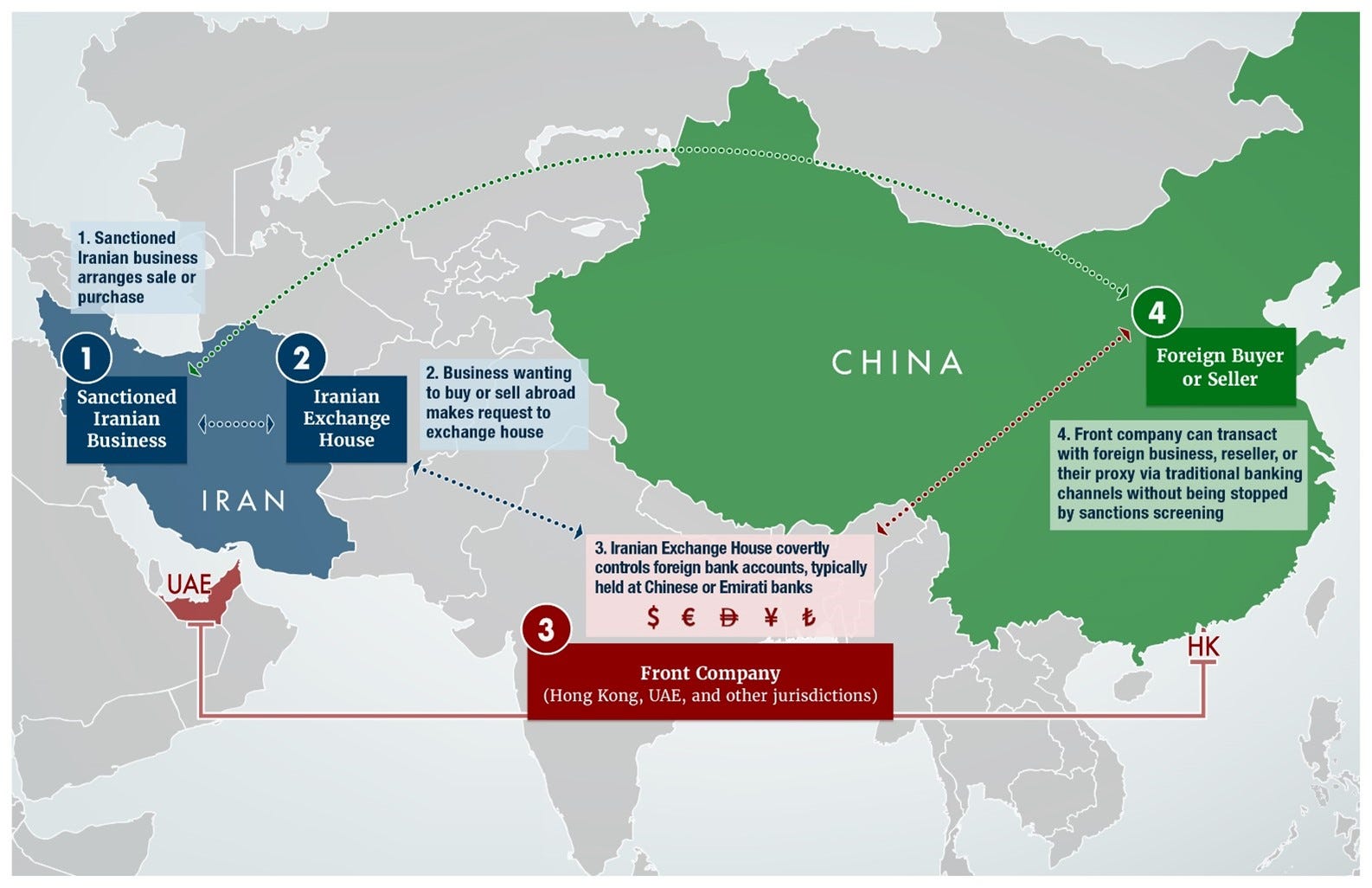
Second, the sanctions evasion infrastructure.
Iran is the world's most sophisticated laboratory for circumventing Western financial enforcement, and the networks it built had dual-use value for Beijing's own contingency planning in a Taiwan scenario where China itself could face comprehensive sanctions. The operational knowledge embedded in those networks is now degrading in real time.
Third, the alliance contrast.
China, Russia, and Iran signed their trilateral agreement barely a month ago. Neither Moscow nor Beijing has moved to defend Tehran. The "axis" has been revealed as a series of transactional arrangements that collapse the moment American power is applied with seriousness.
A Russia that cannot sustain its commitments to Iran has no credible capacity to open a northern front against Japan on Beijing's behalf.
It also shows that Japan's alliance with the United States rests on mutual defense obligations and seventy years of institutional integration. Every government in the Western Pacific can now see the difference.
Fourth, the Global South recalculation.
Beijing's diplomatic brand across the developing world rested on a core proposition: that alignment with China and Russia offered a viable counterweight to American coercion, a path to sovereignty. Operation Epic Fury has gutted that proposition in public view.
This is the second time since January that Washington has moved against a Chinese partner, after Maduro's fall in Venezuela, and in both cases Beijing absorbed the loss without visible distress. Every prospective partner state is now updating its priors.
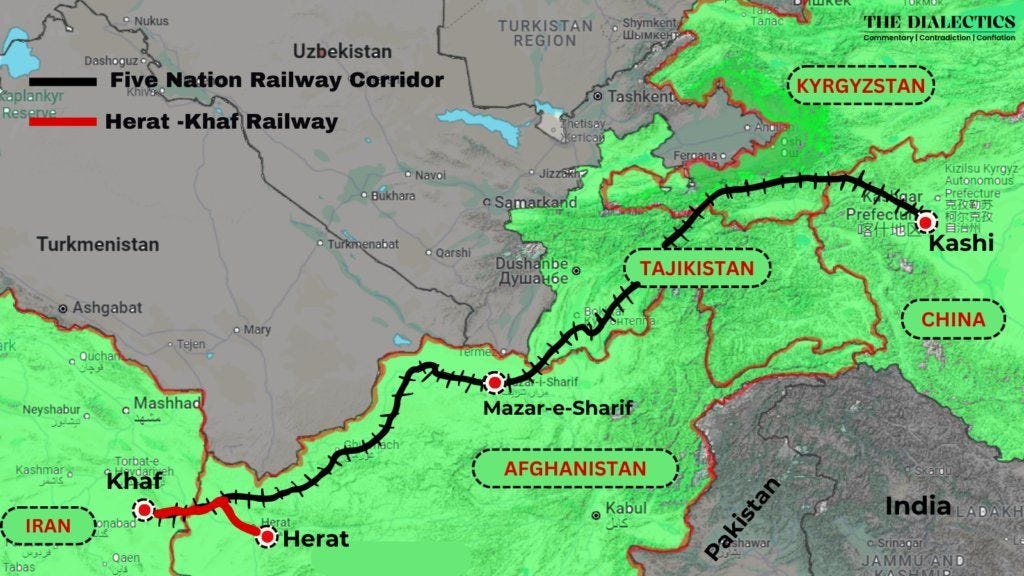
Fifth, the continental bypass.
The Belt and Road corridor through Iran, the railway network that promised to free Beijing from dependence on the very maritime chokepoints Japan and the United States dominate, is now indefinitely deferred.
The Five Nations Railway connecting China to Iran through Central Asia depended on political stability that no longer exists.
Sixth, the Trump factor.
The administration that just executed Operation Epic Fury alongside Israel has simultaneously deepened military cooperation with Tokyo, expanded joint exercises in the Philippine Sea, and maintained the institutional commitment to Japanese security that no Chinese partner has ever received from Beijing.
What Tokyo received today was a confirmation: that the alliance architecture Japan has invested in since 1952 remains the only security framework in the Pacific that functions under pressure. China's alternative offered the promise of multipolarity but no protection. The distinction now carries weight and Japanese strategists are the primary beneficiaries of every government that recognizes it.
Link: Japan Is the Big Winner
Casualties (+1)
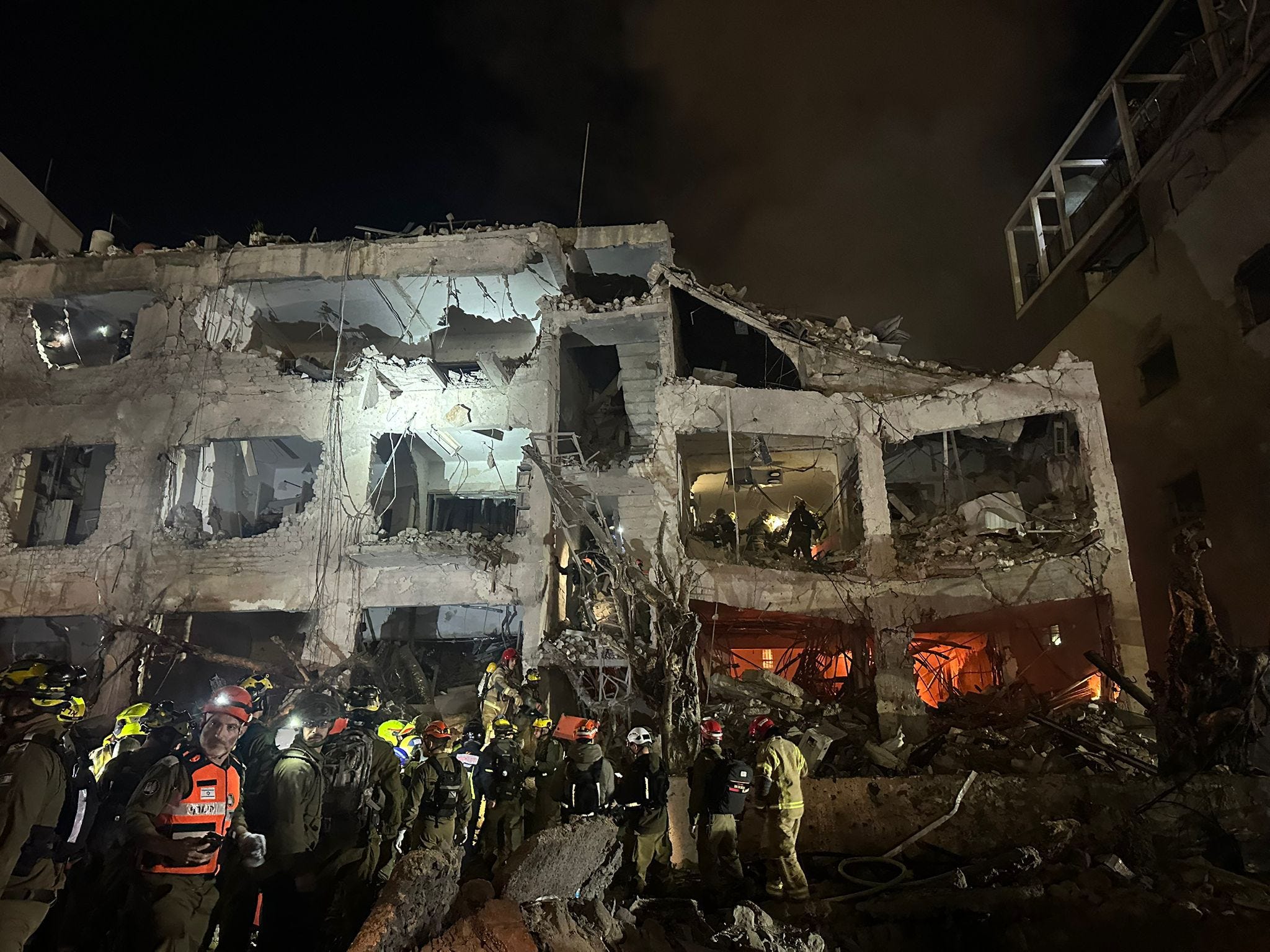
The Times of Israel reports that a woman was killed and dozens more were injured by an Iranian missile that struck a Tel Aviv residential block late Saturday night, in the first deadly barrage to rock Israel during its renewed fighting with Iran.