Israel Update: Day 840
One Hostage Remains in Gaza; IDF Soldiers lost since October 7th: 923
Board of Peace/Gaza Rebuild
Yesterday in Davos, President Trump signed the Charter of the Board of Peace, followed by a presentation from Jared Kushner on rebuilding the New Gaza.
On Dan Senor’s popular/must-listen to podcast Call Me Back today, he walked listeners through all of the newly created committees. I have added some additional information to each group.
The Board of Peace, which is a Trump chaired body of invited heads of state tasked with resolving global conflicts, whose decisions and membership terms ultimately depend on President Trump’s approval
Members include 26 countries (as of now): Albania, Argentina, Armenia, Azerbaijan, Bahrain, Belarus, Bulgaria, Egypt, Hungary, Indonesia, Israel, Jordan, Kazakhstan, Kosovo, Kuwait, Mongolia, Morocco, Pakistan, Paraguay, Qatar, Saudi Arabia, Turkey, UAE, USA, Uzbekistan, and Vietnam.
Click here for the full text of the charter via the Times of Israel
General Executive Committee, which is a senior advisory group that sets the Board of Peace’s agenda composed of key Trump associates and prominent international figures
Members: Secretary Marco Rubio, Steve Witkoff, Jared Kushner, Sir Tony Blair, Marc Rowan, Ajay Banga, Robert Gabriel
Gaza Executive Committee, which is a regional and international coordination body which includes senior officials from Turkey, Qatar, Egypt, the UAE, and is led by former UN envoy to the Middle East Nickolay Mladenov, that manages civil and security coordination between Gaza and the Board of Peace
Members: Steve Witkoff, Jared Kushner, Minister Hakan Fidan (Turkey), Ali Al-Thawadi (Qatar), General Hassan Rashad (Egypt), Sir Tony Blair, Marc Rowan (American businessman), Minister Reem Al-Hashimy (UAE), Yakir Gabay (private Israeli businessman), Sigrid Kaag (UN diplomat)
National Committee for the Administration of Gaza (NCAG) also referred as the Technocrat Committee, which is a professional administrative team, a Palestinian administrative team responsible for the day-to-day governing and basic governing functions in the Gaza Strip.
The NCAG will be led by Dr. Ali Sha’ath. Shaath was born in Gaza and has worked with the Palestinian Authority in the past, according to FDD. The Times of Israel reported that the initial committee has 15 members and are expected to handle various government functions, including agriculture, trade, health, education, police, and security.
International Stability Force (ISF), a multinational security force intended to support stability security in Gaza by maintaining order and enabling the civilian administration to operate some safety and predictability.
Major General Jasper Jeffers, Commander U.S. Special Operations Command Central, will serve as Commander of the ISF
Jared Kushner unveils Gaza demilitarization, reconstruction plan at Davos by Lahav Harkov in Jewish Insider
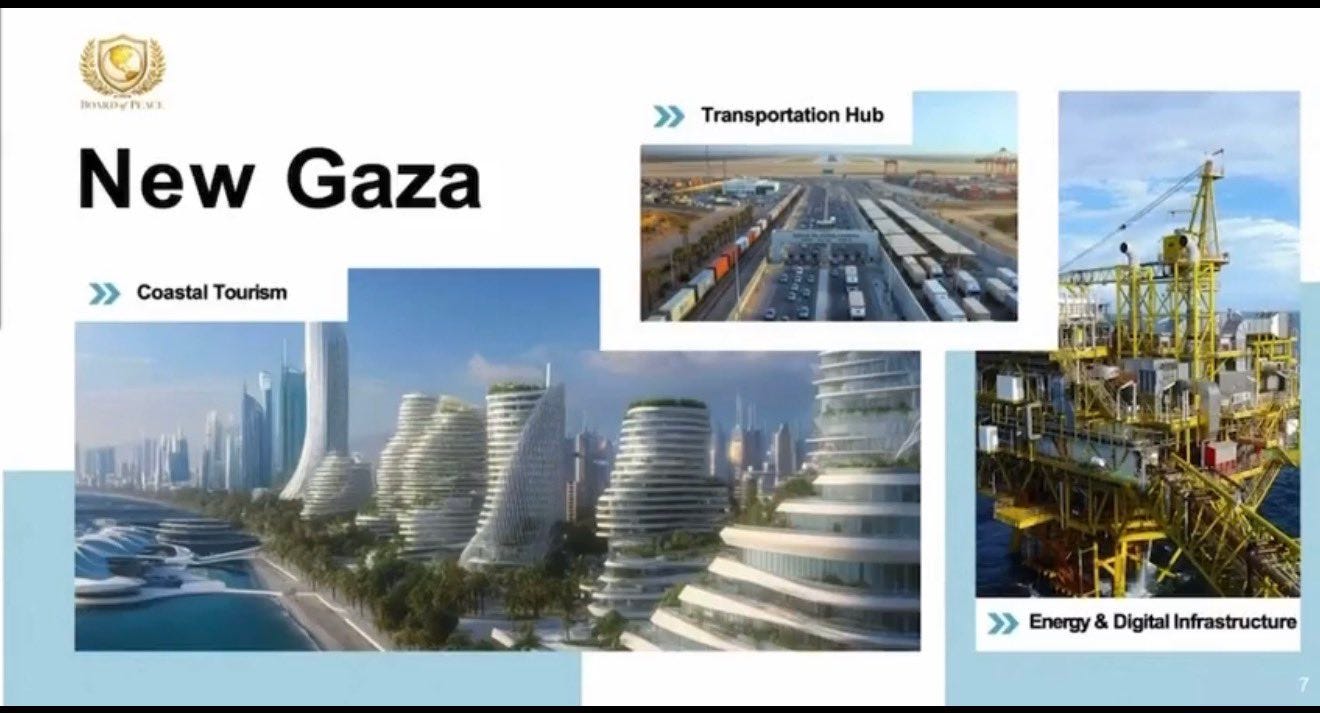
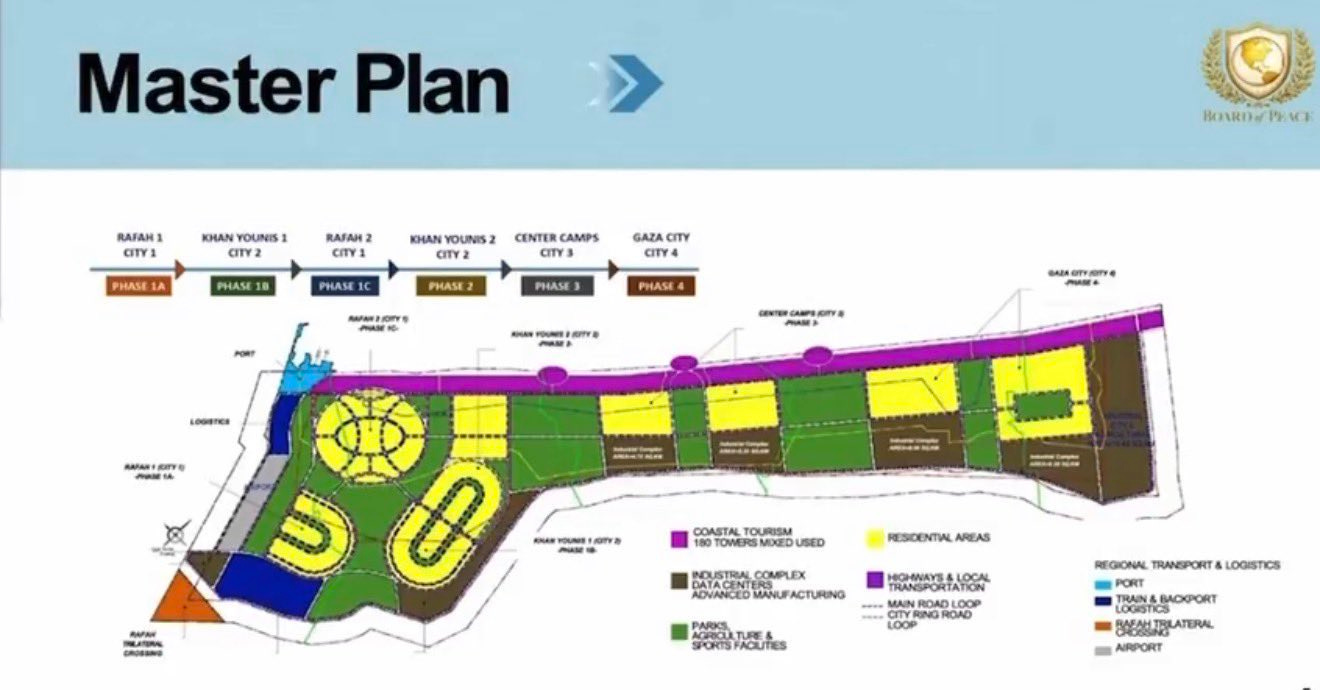
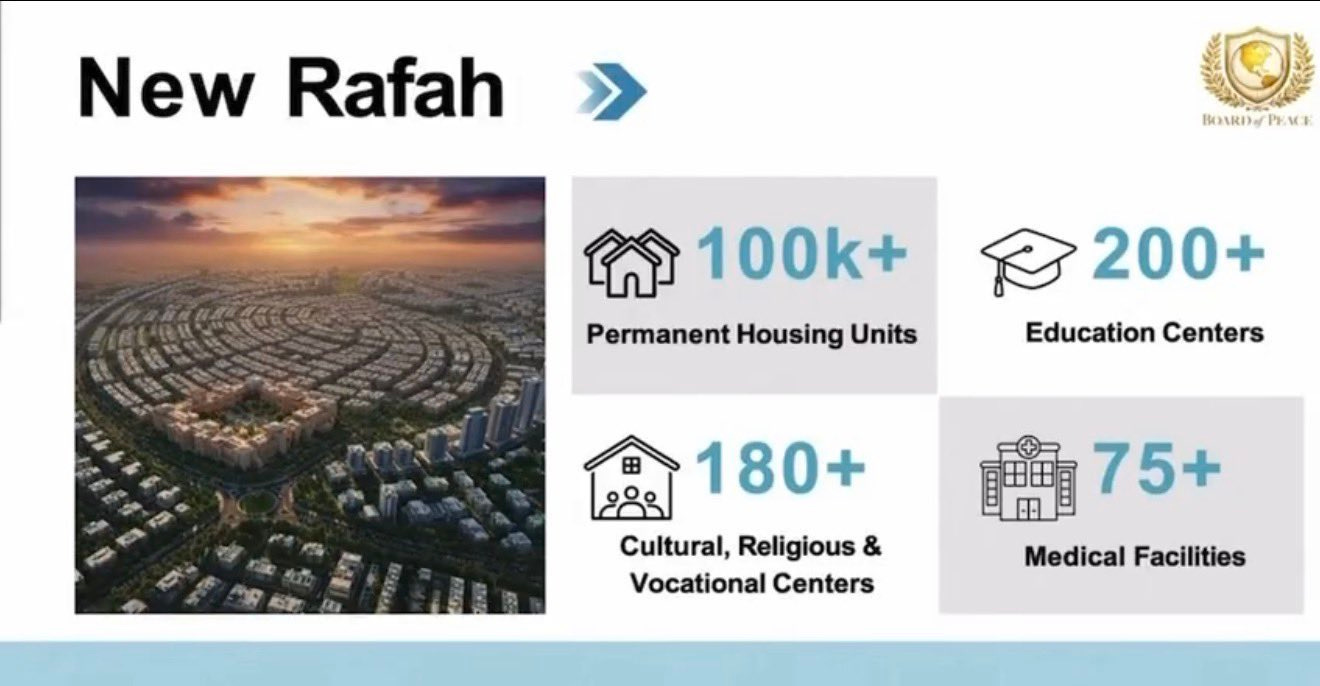
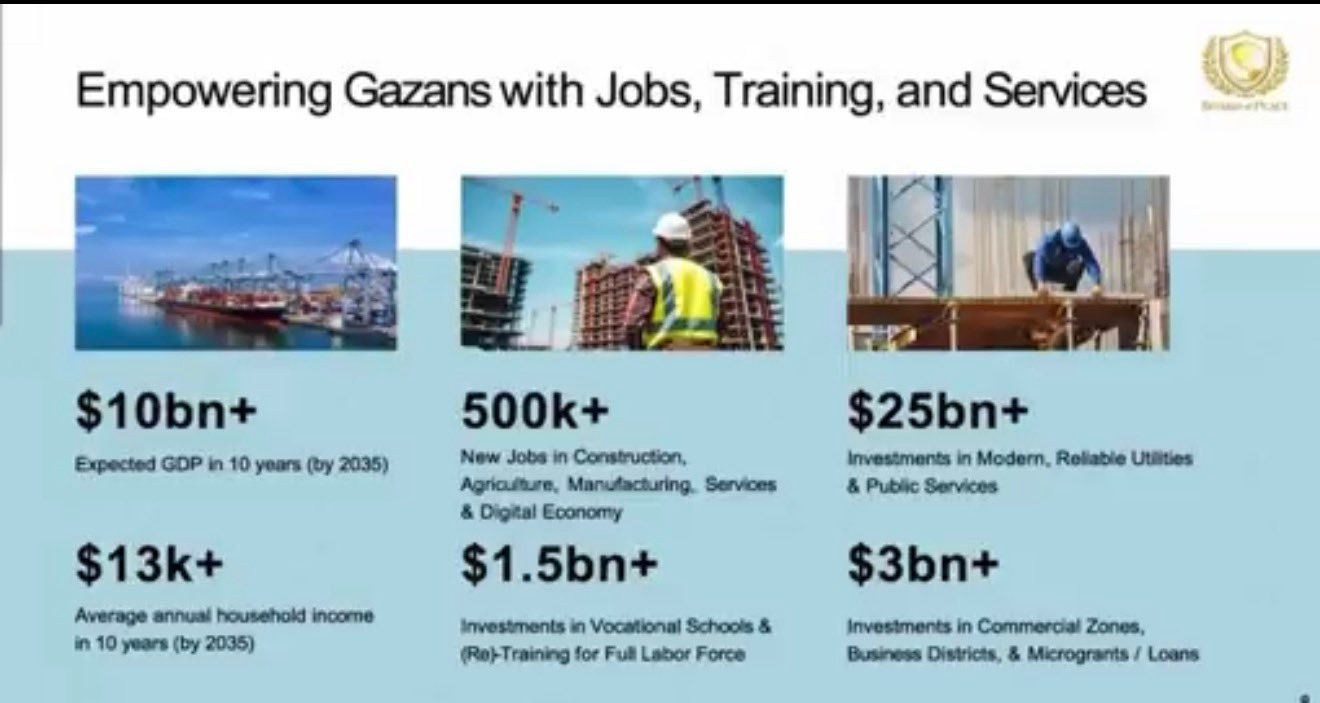
Hamas must demilitarize before Gaza can undergo redevelopment, President Donald Trump’s informal advisor Jared Kushner said on Thursday on the sidelines of the World Economic Forum in Davos, Switzerland, as he presented the administration’s plan to disarm the terrorist group and rebuild Gaza.
Kushner said that the disarmament of Hamas would be a prerequisite to the reconstruction of the enclave. “Without that we cannot rebuild,” he said. “If Hamas does not demilitarize that will be what holds back Gaza and the people of Gaza from achieving their aspirations.”
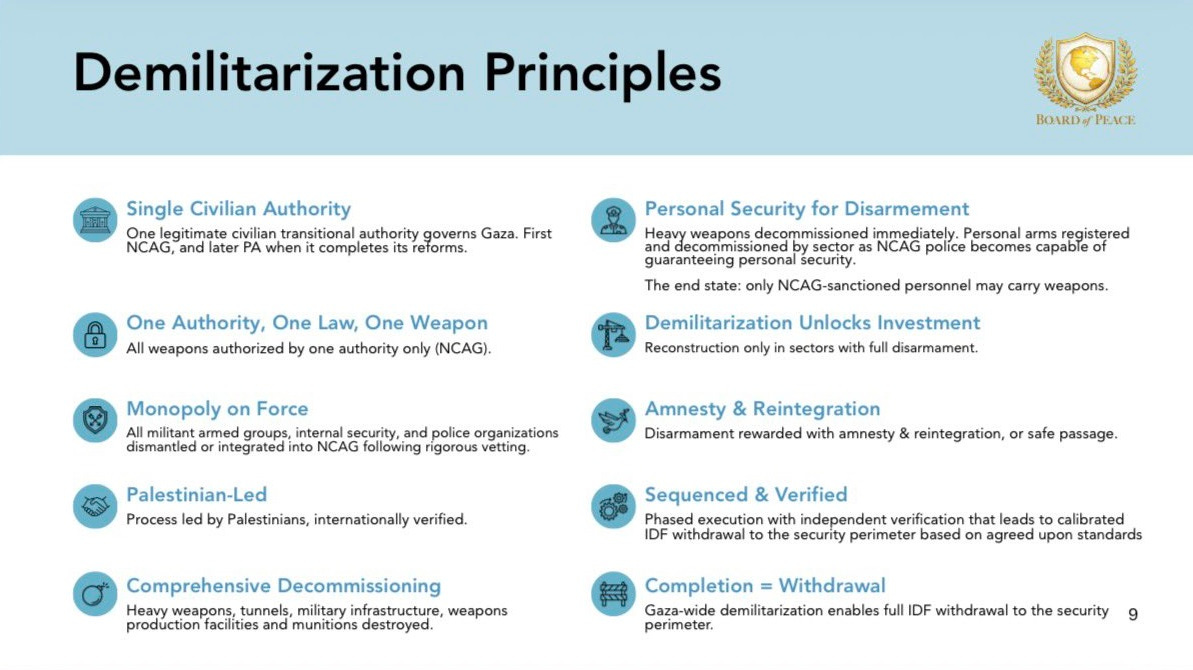
Kushner presented the administration’s “demilitarization principles” meant to be implemented in the next 100 days. These include the destruction of “heavy weapons, tunnels, military infrastructure, weapons production facilities and munitions.”
According to the plan, Gaza will be governed by a single civilian authority, which will first be the National Committee for the Administration of Gaza (NCAG), the committee of Palestinian technocrats announced last week, followed by the Palestinian Authority, if it undergoes reforms. Any personal weapons in Gaza must be authorized by the NCAG, which will have a monopoly on the use of force, integrating and vetting any internal security and police.
Reconstruction, according to the plan, will only take place in sectors that are fully disarmed, and those who agree to disarm will be given amnesty and reintegration into or safe passage out of Gaza.
The IDF will gradually withdraw from Gaza based on the successful implementation of the plan, until it fully withdraws to the IDF-controlled security perimeter separating Gaza from Israeli civilians.
The other Board of Peace priorities in Gaza over the next 100 days will be delivering humanitarian aid and rehabilitating essential infrastructure, including water, electricity, sewage, hospitals and bakeries, as well as clearing rubble and building improved temporary housing.
Ali Sha’ath, the head of the NCAG, said in a video address shown at the Davos ceremony that the Rafah border crossing would be opened next week. The Board of Peace’s high representative for Gaza, Nickolay Mladenov, also said in a post on X that “an agreement has been reached regarding the preparation for re-opening of the Rafah crossing. Concurrently, we are working with Israel and the National Committee for the Administration of Gaza to expedite the search for the remaining Israeli hostage.”
Link: Jared Kushner unveils Gaza demilitarization, reconstruction plan at Davos
Israel/Middle East Related Articles and Analysis
U.S. Department of Treasury Exposes and Disrupts Hamas’s Covert Support Network
**According to Eitan Fischberger, that brings the total number of Palestinian NGOs worldwide designated by the U.S. government as terror financiers to a whopping 28. For a full list, please click the link above.
Today’s action targets six Gaza-based organizations that claim to provide medical care to Palestinian civilians but in fact support the military wing of Hamas, the Izz al-Din al-Qassam Brigades. The fraudulent nature of these organizations, which use deception to raise funds from international donors, demonstrates Hamas’s perfidy and deprives innocent civilians of the medical care they need. OFAC is also targeting the Popular Conference for Palestinians Abroad, an organization that purports to broadly represent Palestinians but is clandestinely controlled by Hamas and has been a key backer of several so-called flotillas attempting to access Gaza.
Hamas secretly operates a network of organizations in Gaza that purport to be independent but are subordinate to the Hamas military wing
The purpose of these designations is to help reduce the overall terrorist financing risk in the charitable non-profit organization sector by informing the public about financing networks operating in support of terrorist organizations and activities. This action aims to enable the continued provision of humanitarian aid to Gaza—subject to OFAC’s humanitarian general licenses—by raising the public’s awareness of these Hamas-controlled organizations, especially as the international community begins to build up a stabilization force for the Gaza Strip.
The Gaza-based organizations Waed Society Gaza (Waed Society), Al-Nur Society Gaza (Al-Nur), Qawafil Society Gaza (Qawafil), Al-Falah Society Gaza (Al-Falah), Merciful Hands Gaza (Merciful Hands), and Al-Salameh Society Gaza (Al-Salameh) are organized by, and integrated into, Hamas’s military wing.
Documentary evidence captured from Hamas also shows that Hamas provides its fighters with detailed instructions on how they must navigate the group’s own bureaucracy to formally request their affiliated organizations provide their fighters with specific projects and services.
The Popular Conference for Palestinians Abroad (PCPA) is a main organizer of recent flotillas that sought to break Israel’s security cordon around Gaza…The PCPA does not only work with, and in support of, Hamas—it operates at Hamas’s behest. The strategic and tactical aspects of the PCPA’s activity are controlled by Hamas through the placement of key Hamas-linked figures in major positions throughout the organization.
As a result of today’s action, all property and interests in property of the designated or blocked persons described above that are in the United States or in the possession or control of U.S. persons are blocked and must be reported to OFAC. In addition, any entities that are owned, directly or indirectly, individually or in the aggregate, 50 percent or more by one or more blocked persons are also blocked.
Link: Treasury Exposes and Disrupts Hamas’s Covert Support Network | U.S. Department of the Treasury
The Wages of the Ayatollahs’ Antisemitism by Bret Stephens in The New York Times
Since the Iranian Revolution of 1979, the regime has had a singular obsession with Jews. The suppurating hatred of Israel is downstream from that.
Iranian foreign policy freely mixes anti-Israel furies with anti-Jewish ones.
It has supported Hezbollah, sworn to Israel’s destruction, to the tune of billions of dollars over four decades.
It has ordered antisemitic terrorist attacks at long range…
It has supplied weapons and training for Hamas, along with ballistic missiles for Yemen’s Houthis.
It has repeatedly courted international outrage by hosting a conference of Holocaust deniers and antisemitic cartoon contests.
All this might at least be intelligible if Iran and Israel had ancient grievances or territorial disputes. There are none. Iran was among the first predominantly Muslim states to de facto recognize Israel, and Jerusalem and Tehran maintained close ties while the Shah was in power. Even today, ordinary Iranians themselves are markedly less antisemitic than people in other Middle Eastern states…
The current regime’s obsession is purely a function of Islamist ideology, not national interest. That’s what’s at the root of that anti-regime chant.
What ordinary Iranians are revolting against isn’t just economic mismanagement and corruption. It’s also a regime that would rather pursue a perpetual jihad against the Zionist enemy than feed its own people.
For years, the cruelty of the policy was disguised by its apparent success, as Iranian proxies entrenched themselves across the Middle East and built a so-called ring of fire around the Jewish state. But after the attacks of Oct. 7, 2023, Israel systematically dismantled that ring…At a stroke, it turned decades of Iranian investment in its efforts to destroy Israel to rubble and ash.
It exposed to the Iranian people the regime’s military incompetence and helplessness. And it reminded Iranians that there’s a different path for Muslim states — like the United Arab Emirates, they can be moderate, prosperous, at peace with Israel and just across the Persian Gulf.
But when the regime collapses, as sooner or later it will, its antisemitic politics will have played a large role in its demise.
There’s a broader lesson here in an era when anti-Jewish politics are gaining broad purchase. Antisemitism is wicked for many reasons, but it’s also wickedly dumb: for fostering a mind-set of lurid conspiracy theories; for seeking scapegoats for national failures rather than taking responsibility; for stigmatizing and suppressing a productive and educated minority.
Societies that have expelled or persecuted their Jewish communities, from Spain to Russia to the Arab world, were all destined for long-term decline.
It needn’t be like that forever. A regime that sought to project on Jews its own malevolence may soon have its long overdue comeuppance. And an Iranian people who reclaim their freedom as individuals can also reclaim their reason as a nation.
Antisemitism
Inside Iran’s Wikipedia War by Ashley Rindsberg with NPOV/The Free Press
As internet blackouts prevent Iranians from documenting their own repression, pro-regime editors on Wikipedia are working to control how these events, and Iranian history more broadly, are recorded and read by the rest of the world.
An investigation into Wikipedia editing patterns reveals a yearslong, coordinated campaign to sanitize the Islamic Republic’s human rights record. According to a 2024 Times investigation, entries have been systematically edited to downgrade Iranian atrocities.
The effects reverberate beyond Wikipedia. When AI systems like ChatGPT are queried about Iranian leaders or events, they often draw from these compromised articles—meaning the propaganda flows downstream into the broader information ecosystem that millions rely on daily.
Pro-Iranian regime editors exploit Wikipedia’s consensus-based structure through sophisticated tactics. Chief among them is what my Substack, NPOV, calls “abrasive deletion”—making small edits over time that gradually erode entire sections.
When anonymous users are challenged, they justify removals by citing the need for “trimming” or claiming material is “trivial”—language that makes the erosion appear like routine maintenance rather than coordinated manipulation.
The playbook includes two main tactics that work in tandem.
One appears when coordinated groups act as voting blocs on article “Talk Pages” (forums where editors discuss possible improvements to articles), outvoting individual editors trying to add verified facts.
Another, authorship dominance, occurs when single editors or small groups maintain control over 80–90 percent of an article’s text, camping out on pages and reverting any challenges. Anonymous users carry out numerous edits—citing needs for “trimming” or claiming material is “trivial”—making it impossible to determine their motivation, though the pattern of deletions is clear.
This has been well-documented. A recent Wikipedia arbitration case exposed editors for citing state media outlets like irdiplomacy.ir as sources. The so-called “Gang of 40”—a network of anti-Zionist editors who cover Israel-Palestine topics from a pro-Iranian regime perspective—controls over 90 percent of dozens of articles.
Since Iranian protests erupted in December 2025, Wikipedia’s 2025–2026 Iranian protests page has drawn from over 400 sources. Authorship remains relatively distributed—no single editor controls more than 8 percent (as of time of writing)…But the Talk Page reveals the pressure campaign in real time. Some editors argue that calling the Iranian government a “regime” violates neutrality, despite most sources using that term.
This is what authoritarian information warfare looks like in 2026. There’s violence in the streets to silence dissent in real time. Then come the internet blackouts, preventing real-time documentation and cutting off the flow of evidence to the outside world. And once the immediate crisis fades from international attention—once bodies are quietly buried and the news cycle moves on—the propaganda operation moves in to systematically rewrite what happened. The Islamic Republic isn’t just killing protesters. It’s erasing the evidence that they existed at all.
The encyclopedia that millions trust has become, in these corners, an extension of the regime’s propaganda apparatus.
Why Israel Is Seen Everywhere and Everything Else is Forgotten by Samuel J. Hyde
When arguments about international coverage of Israel arise, they almost always begin in miniature…They are not unimportant. Words matter. But they are also a distraction. They keep us arguing on the surface of the story, while the deeper, more corrupting structures shaping it remain largely untouched, and thus unseen.
There are two such structures, two distortions so large that they become strangely invisible.
The first is the sheer scale of attention. Not criticism, attention. A systemic fascination, bordering on obsession, with covering Israel as though it were the gravitational center of world affairs. The fascination is both disproportionate and scalable.
Prof. Gil Troy noted: One Microsoft Copilot Artificial Intelligence analysis found [that] between 50,000 and 70,000 articles about Gaza were written worldwide in nine months – compared to 1,000 articles about Mosul in nine months.”
Matti Friedman observed that AP employed more full-time journalists covering Israel than it did covering China, India, and Russia combined.
Israel is covered by more full-time staff than all of sub-Saharan Africa combined, which is made up of dozens of countries, encompassing hundreds of millions of people, multiple wars, famines, mass displacement, and – in some cases – genocidal violence.
This saturation coverage creates the illusion of centrality. It trains audiences to believe that whatever they see most frequently must be the most important event in the world. Israel becomes not just another country among many but a kind of moral index of the age – a stage upon which the world’s conscience is imagined to be tested and revealed…Meanwhile, catastrophes of far greater scale and brutality – such as the ongoing genocide in Sudan – flicker briefly, if at all…
It is intimate, familiar, and endlessly legible to Western eyes in a way that “distant” tragedies are not. And so it becomes over-seen, over-examined, intensely dissected, and uniquely moralized until the examination itself becomes both activism and a substitute for understanding.
The second distortion is conceptual. Israel’s wars are routinely framed as the “Israeli-Palestinian conflict,” as though the entire story were a localized struggle between two neighboring peoples, one strong and one weak, one powerful and one victimized.
…a vast and intricate regional struggle is reduced to a single dyad: Israelis vs Palestinians. In this reduction, Israel is cast as the dominant actor, the controlling force, and ultimately the villain.
Power flows in one direction only. Agency belongs almost exclusively to Israel. The wider forces shaping the conflict fade into the background or vanish altogether.
This is how media distortion always works – not by inventing the facts but by shrinking and enlarging them selectively.
The result is a narrative that is both emotionally compelling and intellectually impoverished, a morality play in which a villainous country called Israel comes to embody the worst sins of the modern age, while the broader regional dynamics dissolve into abstraction.
Once this narrative is established, it becomes self-reinforcing. The more Israel is covered by the media, the more it seems to matter uniquely. The more it is framed as the central actor in a simplified conflict, the easier it becomes to load it with symbolic meaning.
…the story being told is already too small to hold the truth, and too large to escape moral projection. It magnifies Israel until it eclipses the region, and then isolates it until it bears responsibility for forces far beyond its control.
To notice this is not to deny Palestinian suffering, nor to sanctify Israeli policy. It is to insist on proportionality, context, and intellectual honesty – qualities without which journalism becomes a kind of secular theology, assigning sin and virtue according to narrative convenience rather than reality.
If the coverage of Israel feels uniquely charged, moralized, and obsessive, it is because it is.
Link: Why Israel Is Seen Everywhere and Everything Else is Forgotten
The Final Hostage
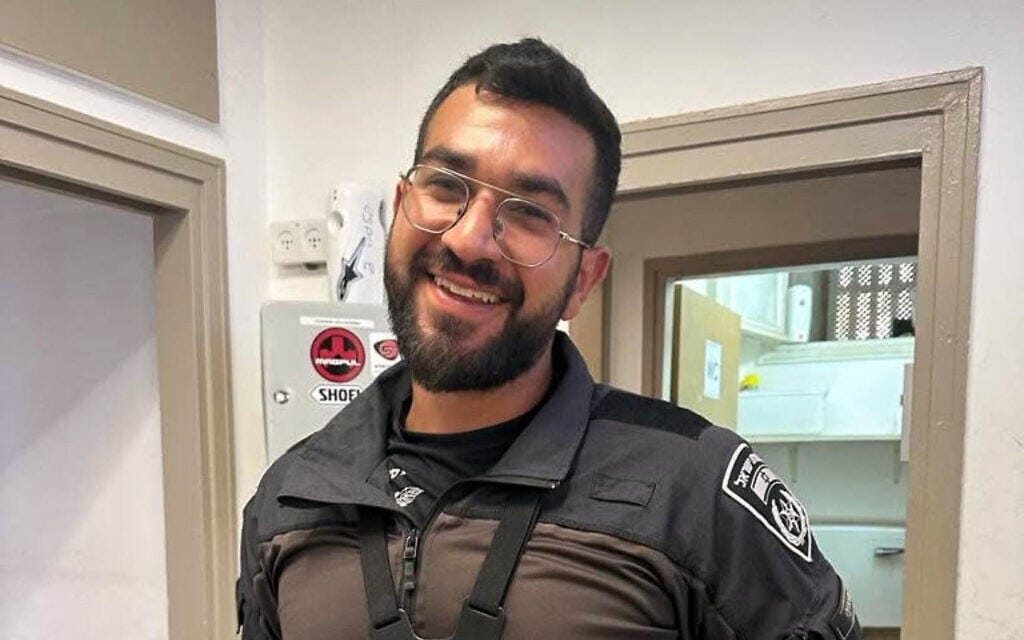
Hamas now holds the body of 1 hostage, Ran Gvili, who is the last remaining Israeli taken on October 7th. The terrorist organization has returned the bodies of 27 deceased hostages since the ceasefire.
Casualties (no change)
1,992 Israelis have been killed including 923 IDF soldiers and police since October 7th
The South: 475 IDF soldiers during the ground operation in Gaza have been killed. The toll includes three police officers (two of which were killed in a hostage rescue mission) and two Defense Ministry civilian contractors.
Iran: 34 Israelis have been killed in Israel from missiles attacks from Iran
The North: 133 Israelis (85 IDF soldiers) have been killed during the war in Northern Israel
The West Bank: 78 Israelis (32 IDF and Israeli security forces)
Additional Information (according to the IDF):
6,419 IDF soldiers have been injured since the beginning of the war, including at least 955 who have been severely injured.
2,995 IDF soldiers have been injured during ground combat in Gaza, including at least 565 who have been severely injured.
The Gaza Casualty Count: According to unverified figures from the Hamas-controlled Gaza Health Ministry, 71,412 total deaths have been reported, with a civilian/combatant ratio: 1:45 (which is remarkably low by the standards of modern urban warfare).